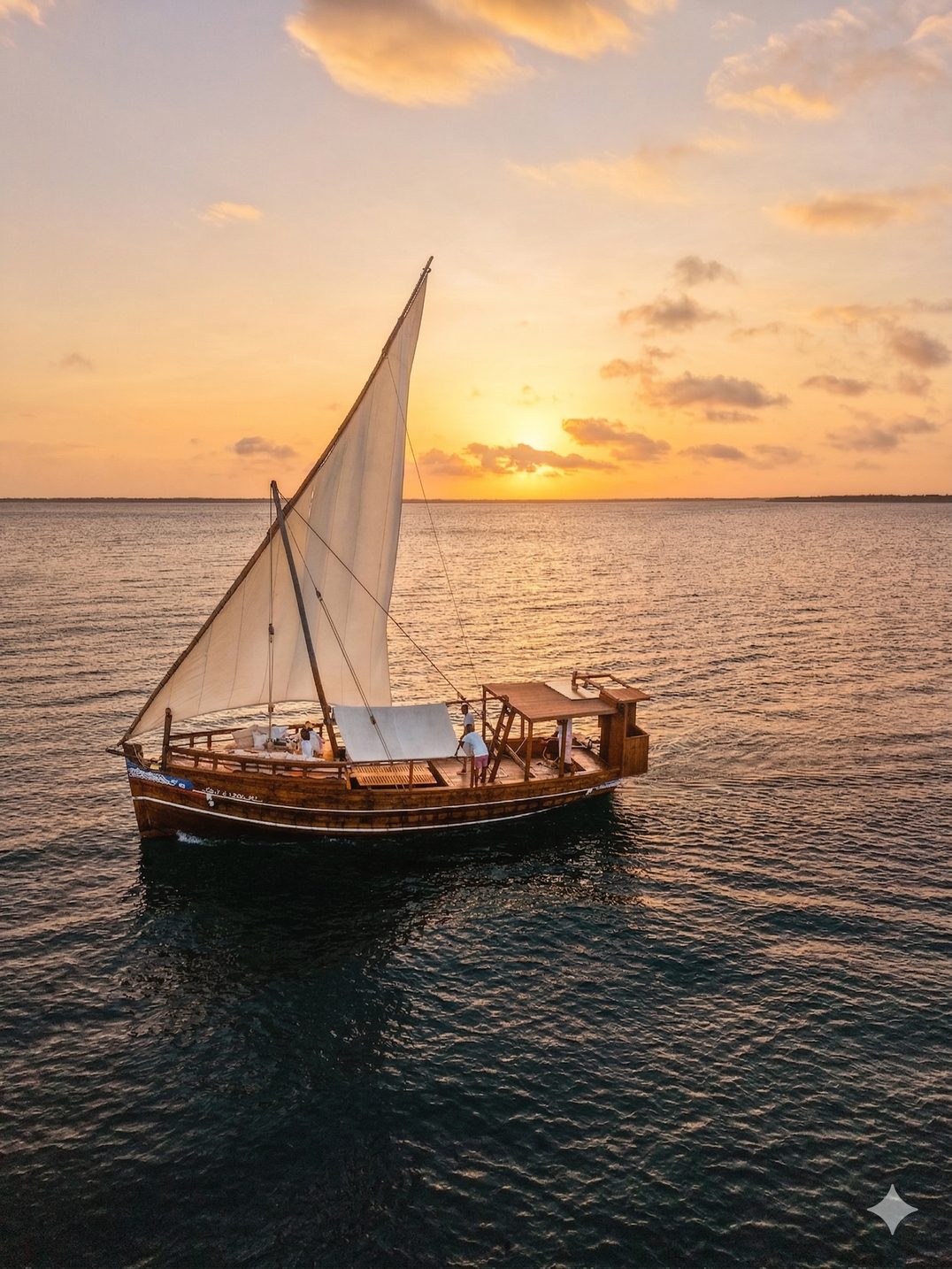
An afternoon with the carvers who shaped Kilindini, keel first, then ribs, then planks. The smell of wet wood after rain. The slow patience of a boat becoming itself.
The site.
The building site at Kipungani is not really a site. It is a strip of beach, shaded by makuti, with dhows in different stages of life: one upturned and being scraped, one half-ribbed, one with a new hull still smelling of timber and sea air. The work is quiet, physical and exacting. Not exact in the straight-line way. Exact in the older way, by eye, by hand, by experience, by knowing what the wood will allow.
The keel comes first: a long, strong piece of timber set into the sand at the angle the boat will grow from. From there, the ribs rise one by one, each shaped to hold the curve of the hull. Nothing feels forced. The shape is found slowly.
Each plank is offered to the ribs, taken away, shaved, adjusted, and offered again. The fitting takes longer than the cutting. A boat like this is not assembled so much as listened to,wood against wood, curve against curve, patience against time. This is how Kilindini became herself over the better part of a few years.
This is the part of Lamu that does not always make it into brochures. The craft behind the beauty. The people behind the sail. The knowledge held quietly on a strip of beach in Kipungani. It is also the part we love most.